From Copilot to AI Agent: How Autonomous Systems are Revolutionizing B2B SaaS
The B2B SaaS landscape is currently undergoing what is arguably its most radical transformation since the widespread migration to the cloud. While the past few years have focused on simple AI features and supportive copilots, autonomous systems are now increasingly taking center stage. For decision-makers, executives, and IT leaders, the question is no longer whether Artificial Intelligence will be used, but how deeply it will be integrated into core processes. Those who still rely on manual data entry or reactive systems run the risk of falling behind. But what does the shift towards “Agentic AI” mean concretely for everyday business operations and industry-specific solutions?
What Happened?
Current market analyses and technology news reveal a clear trend: the software industry’s focus is shifting from reactive assistants to proactive AI agents. The global market for B2B SaaS is estimated to reach a massive volume of up to 390 billion USD by 2025. We are also seeing rapid growth in the European market. However, this growth is no longer primarily driven by traditional software subscriptions, but by “AI-native” platforms.
The year 2024 was considered the year of the copilots—systems that made suggestions, generated texts, or provided code snippets, but always had to wait for a human user to click. The current leap is now moving toward so-called AI agents. These systems are capable of executing complex, multi-step workflows completely autonomously. Startups and tech giants are investing billions in software that, for example, independently analyzes customer inquiries, pulls the relevant information from the CRM, formulates a solution, and sends it directly to the customer—all without human intervention.
What Does This Mean?
For companies, whether traditional mid-sized businesses, highly specialized service providers, or forward-thinking automotive dealerships, this represents a paradigm shift in resource utilization. Autonomous AI agents no longer just do the prep work; they complete processes. This leads to a completely new definition of productivity. Employees are freed from repetitive, time-consuming tasks and can focus on strategic decisions, personal customer contact, and creative problem-solving.
Another important aspect is the rise of “Vertical SaaS 2.0”. Instead of relying on generic, cross-industry solutions, specialized systems that are tailored exactly to the needs of a specific niche are growing much faster. These vertical AI solutions understand specific industry jargon, know the regulatory requirements, and integrate seamlessly into existing industry software. The software adapts to the company’s workflow, not the other way around.
Opportunities
The implementation of autonomous AI systems offers immense opportunities for growth and scalability. A key advantage is hyper-personalization in customer communication. While traditional mass communication often achieves low response rates, AI-supported, highly personalized interactions can drastically increase reply rates—sometimes up to 25 percent.
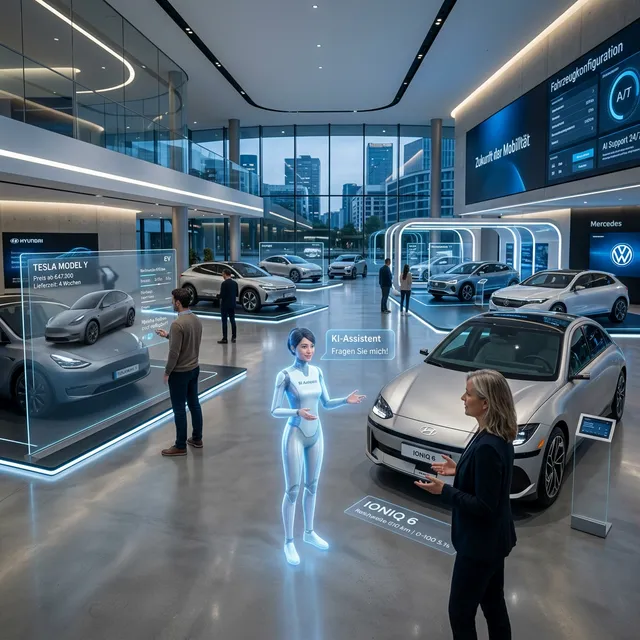
Furthermore, Artificial Intelligence enables unprecedented scalability in customer service. Inquiries can be answered 24 hours a day, 7 days a week, with consistently high quality. Especially in times of skilled labor shortages, this is an invaluable advantage. A dealership, for example, can fully automate appointment scheduling, questions about test drives, or information on specific vehicle models without an employee ever having to pick up the phone. This not only lowers operational costs but also significantly increases customer satisfaction through immediate responses.
Risks & Challenges
Despite the enormous potential, the challenges must not be ignored. The introduction of autonomous systems requires a clean database. If an AI accesses unstructured, outdated, or erroneous data, its autonomous decisions will also be flawed.
Another critical issue is “Shadow AI”—the uncontrolled use of AI tools by employees, bypassing the official IT department. This poses massive risks for data security. Especially in the European region, data protection and compliance (such as the GDPR or certifications like ISO 27001) are not optional extras, but mandatory prerequisites. Companies must ensure that their AI solutions operate transparently, do not process sensitive customer data unencrypted, and have clear control mechanisms (“Human-in-the-Loop” for critical decisions) established.
How SolvraONE Contributes
At SolvraONE, we have not only recognized this shift but are actively shaping it. Our philosophy is not just to provide tools, but genuine digital workers that seamlessly integrate into everyday business.
With FRED, our specialized AI assistant for dealerships, we offer a solution that already demonstrates in live operation how efficiently industry-specific AI can work. FRED fully automates customer inquiries, coordinates appointments, and noticeably relieves the sales staff. Particularly for providers of modern mobility concepts such as car subscriptions or subscription platforms, such automated, highly available customer support is a decisive competitive advantage.
Additionally, SOLVRA Intelligence provides a powerful multi-tenant AI platform that enables companies to make data-driven decisions based on their own, securely managed knowledge bases. We place the highest value on European data protection and security. Our architecture ensures that tenant data remains strictly separated and processes are automated in compliance with the GDPR. SolvraONE brings the power of Silicon Valley’s autonomous AI agents directly and legally compliantly to medium-sized businesses.
Conclusion
The transition from assisting copilots to autonomous AI agents is no longer a vision of the future, but the reality of 2024 and beyond. Companies that adapt this technology will drastically increase their efficiency, reduce costs, and offer their customers a service that was unthinkable just a few years ago. Whether in the B2B SaaS environment or in specialized use at a dealership: Artificial Intelligence is becoming the decisive factor for sustainable corporate success.
Are you ready for the next level of automation? Future-proof your business and benefit from autonomous AI solutions. Learn more at solvraone.com.
Source: Based on market analyses on B2B SaaS development 2024/2025 (incl. Vertex AI Search Insights, Modall.ca, Accio.com).