From Chatbot to Autonomous Agent: The New Era of AI in Customer Service
Customer service is currently undergoing arguably the greatest transformation in its history. While just a few months ago, simple, script-based chatbots were considered the gold standard of automation, a massive technological paradigm shift is now emerging. The time of mere “conversation management” is over – the future belongs to intelligent, autonomous AI agents that don’t just forward inquiries, but solve them independently.
What Happened?
Recent developments in the customer service software market speak a clear language. Leading tech giants like Zendesk have recently made strategic acquisitions to invest heavily in agentic Artificial Intelligence. An outstanding example from the last 48 hours is Zendesk’s acquisition of Forethought. The goal of these maneuvers is to create so-called “Resolution Platforms.” These platforms utilize AI agents that operate autonomously across all communication channels and continuously learn from every single interaction (the “Resolution Learning Loop”).
Industry experts and CEOs of major software companies are now publicly predicting that autonomous AI will fully handle more service interactions than human agents within this current year. In Europe, too, initiatives such as the launch of the generative AI voice assistants “Sharlie” and “MAIA” by Orange France show that speech-to-speech systems and AI copilots are reaching market maturity at breathtaking speed.
What Does This Mean?
For companies, especially in consulting-intensive retail like the automotive industry, this shift means that previous customer service strategies must be fundamentally rethought. A simple bot that merely points to FAQs or spits out opening hours is no longer sufficient to meet the rising expectations of consumers.
Today, customers expect hyper-personalization in real time. The AI must be capable of analyzing the tone, mood, and specific context of the customer and dynamically adapting the solution. The metric is shifting drastically: It’s no longer about how quickly a ticket is closed or escalated to an employee, but whether the AI was able to solve the customer’s underlying problem autonomously, conclusively, and to their utmost satisfaction.
Opportunities
The opportunities presented by this technological quantum leap are massive. For car dealerships and service providers, it opens up the possibility of offering true 24/7 support at a premium level without disproportionately driving up personnel costs.
- Massive Efficiency Gains: Autonomous AI agents can handle routine tasks such as booking test drive appointments, answering questions about vehicle features, or checking the status of workshop appointments flawlessly in a matter of seconds.
- Focus on the Human Element: By intercepting repetitive and time-consuming inquiries, human sales and service advisors finally regain the time to focus on what technology cannot (yet) do: empathy, complex consulting, and building genuine interpersonal relationships.
- Scalability: During seasonal peaks or marketing campaigns, AI-supported customer service can be scaled at will without creating bottlenecks.
Risks & Challenges
Despite the enormous potential, implementing such systems is not without its challenges. Gartner, for instance, predicts that the costs of running highly developed generative AI solutions could rise until 2030. Companies are therefore under pressure not just to buy “any” AI, but to invest in highly efficient, self-improving systems.
Furthermore, data privacy plays a central role. Especially in Europe and when handling sensitive customer data (such as financing information in a car dealership), strict GDPR guidelines must be adhered to. An AI that learns from customer data must be architecturally designed in a way that it not only meets compliance requirements but actively enforces them. Last but not least, there is the risk of an “uncanny valley” effect in customer service: If the AI is not perfectly tuned to the company’s tone of voice, it can frustrate customers rather than delight them.
How SolvraONE Contributes
Exactly at this turning point in technological history, SolvraONE steps in with its expertise. We understand that the future of the dealership does not lie in isolated software solutions, but in networked, intelligent systems.
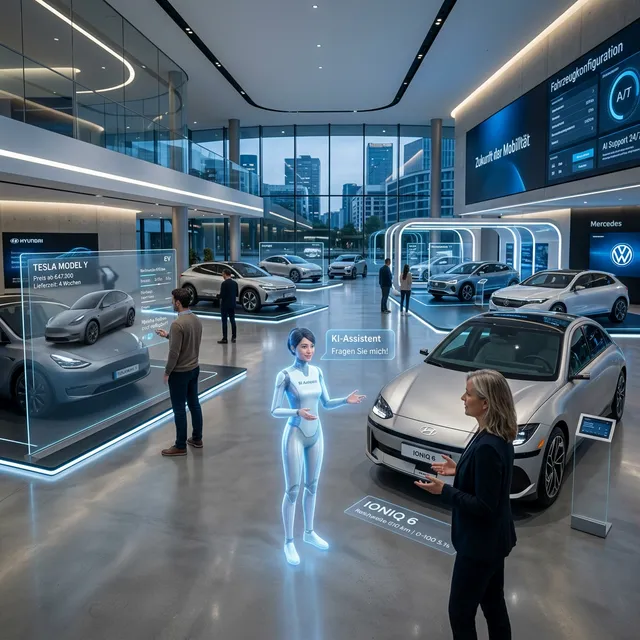
- FRED – The AI Assistant for Dealerships: With FRED, we have an AI assistant in practical use that goes far beyond a conventional chatbot. FRED understands the specific context of the automotive industry. It conducts genuine dialogues, autonomously pre-qualifies leads, and drastically relieves the sales team by conclusively processing inquiries about vehicles and services.
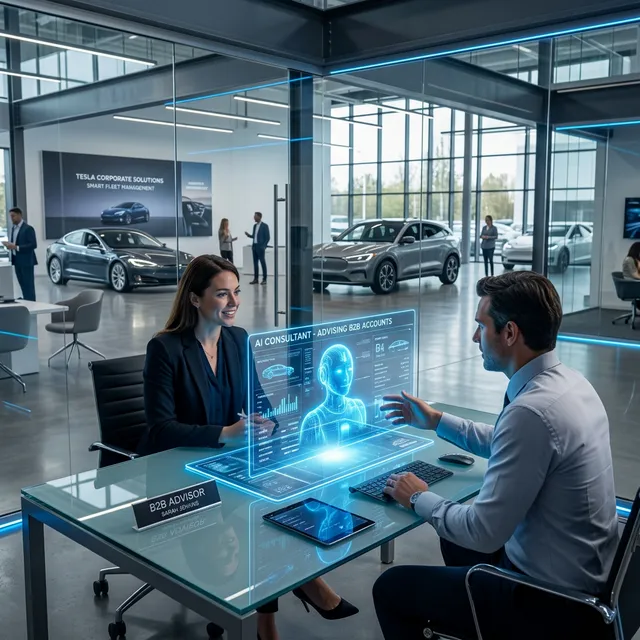
- SOLVRA Intelligence: Our multi-tenant AI platform provides the technological foundation to design hyper-personalized experiences securely and scalably. The architecture of SOLVRA Intelligence is tailored exactly to the requirements of complex B2B and B2B2C structures.
- Customer Inquiry Automation & Data-Driven Decisions: SolvraONE enables companies to generate valuable data points from every customer interaction. Our AI systems continuously learn and provide management with deep analytical insights to make strategic, data-driven decisions for the dealership of the future.
Conclusion
The transition from a reactive chatbot to an autonomous, active AI agent is no longer a vision of the future – it is happening right now. For dealerships and SaaS providers, this is the historic opportunity to make customer service not only more efficient but radically better. Those who invest in smart, learning, and hyper-personalized AI solutions today will secure the decisive competitive advantage for the coming decade. The key to success lies in using the technology as what it is at its best: a tireless copilot that has the human’s back.
Are you ready to take your customer service into the next generation? Learn more about our autonomous AI agents and how FRED can transform your dealership at solvraone.com.
Sources: [1] Zendesk announces acquisition of Forethought, March 2026. [2] Orange France launches AI voice assistants, March 2026. [3] Current industry analyses on AI automation, March 2026.