

The next interesting link is easy to find
The harder question is what helps with the task. A tool may sound promising yet fail because of a missing interface, unresolved conditions or an incompatible device format.
We developed a research atlas to make that work reusable. AI develops the research and assessment. A generator collects structured results into a searchable overview with judgements and links.
The judgement sits beside its reasoning
An atlas entry records the topic, conclusion, useful elements, risks and ideas. Related research stays connected. The overview distinguishes judgements such as “interesting”, “watch”, “discarded” and “implemented”.
| Question | What we record |
|---|---|
| What does the source claim? | The claim and its origin |
| What fits our task? | Useful elements and prerequisites |
| What argues against it? | Risks, conflicts and unresolved points |
| What follows? | A reasoned judgement and next step |
“Implemented” does not automatically mean “commercially successful”. A useful judgement states what the evidence actually establishes.

Drone planning: from a format problem to our own solution
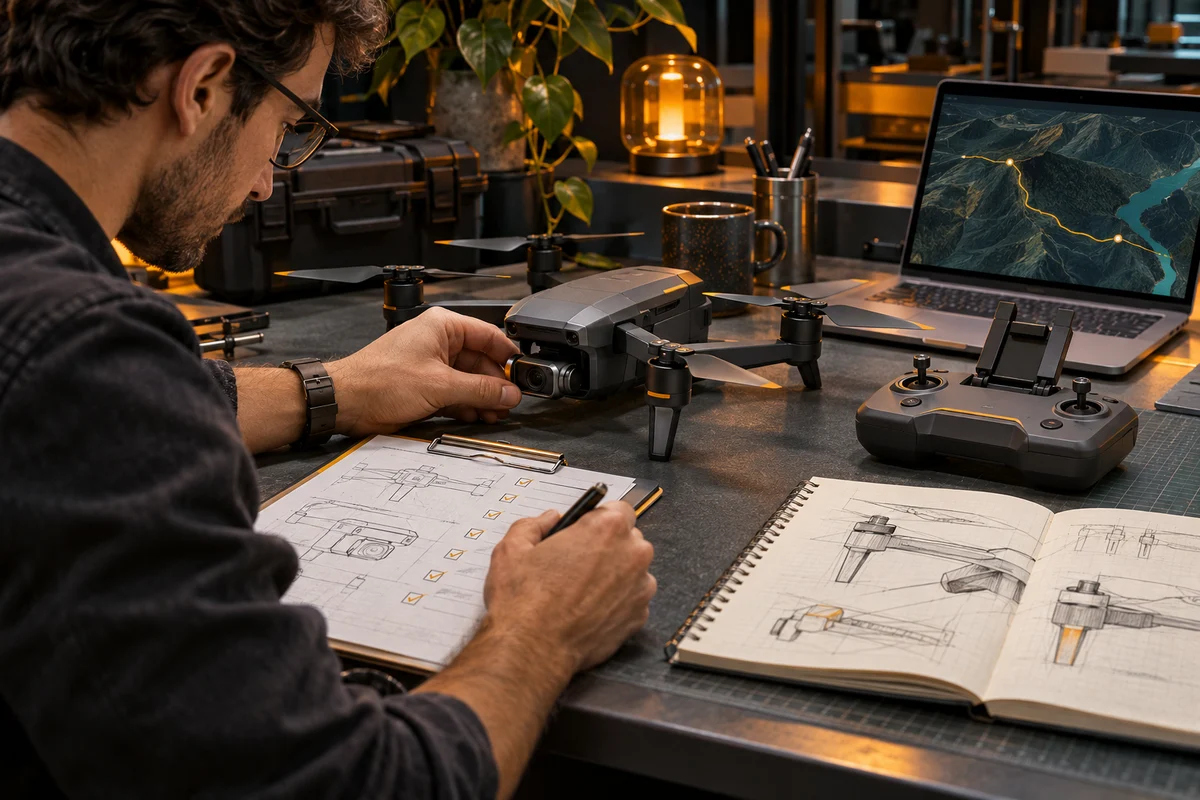
For drone planning, a list of ready-made programs was not enough. The device and route-file format had to fit. Research therefore led to our own toolchain for planning shots and generating a suitable route file.
The next evidence was the implementation and a documented test with still and video capture, beyond the research report itself. Our drone-planning insight separates those steps and their limits.
The collection does not decide for us
The generator validates structure and collects entries; it does not establish the truth of every source. The nine existing generator tests passed during this review. That checks the software, not the quality of every research conclusion.
The useful work is the path from a question to a reasoned action. That can include discarding an idea or watching it for now. For your task, we assess available solutions, necessary adaptations and a useful test.
Tell us about your task or ask us to assess an existing AI idea.
Sources.
- Recherche-Atlas: EntwicklungOwn source · As of
- Drohnenplanung: Entwicklung und TestOwn source · As of
- SolvraONE: research and source reviewOwn source · As of
Keep reading.

Insights · Shot planning
AI plans the shot. And the route behind it
How our developed drone-planning workflow connects light, camera actions and flight paths, with a documented test and human supervision.

Is AI worth it for you? We measure it.
Find useful AI tasks, introduce existing tools, train your people and measure the actual benefit.

Tell us your task or goal
Describe a task or a goal. SolvraONE helps you assess whether and how AI could be useful.